Growing Vietnamese Mint


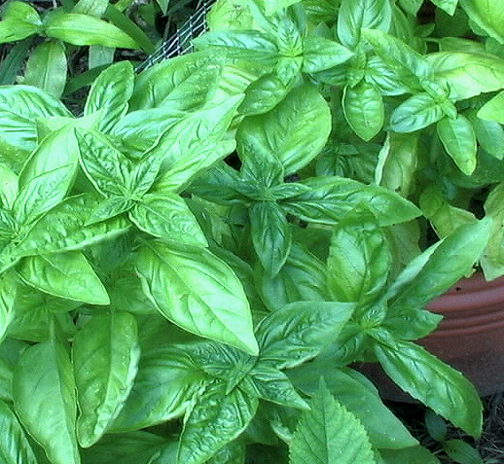
A beautiful, fragrant and useful addition to any garden is Vietnamese mint, Kinh Gioi.  Unlike other mints, such as spearmint and peppermint, this mint has a very mild fresh scent with a hint of lemon.

It grows easily from seed and in fact, once you have this plant one year, expect to see it cropping up in years to come since it reseeds itself freely.  Even with this in mind, it is not anywhere near as invasive as the spearmint in my garden.  Spearmint sends out runners that takes it all over the place.  Vietnamese mint may sprout up in multiple areas, but once there it does not form runners.

The plant grows much taller than either spearmint or peppermint.  Untrimmed stalks can grow as high as three or four feet.  If you trim it back it will make a bushy plant.  You will want to be trimming it back often because this mint is excellent for culinary purposes.  It is often included in spring rolls and salads, combining its soft mint flavor with a lemony taste.

Fresh picked Kinh Gioi, Vietnamese mint 

I tried it recently in a tincture recipe and after just 5 days of steeping it produced a wonderful result that lets me impart its wonderful taste to my chilled water (if you would like instructions about making an herbal tincture with this mint, check out my blog post here).  Of course its fresh leaves are a great addition to chilled drinks as well.

This is a tender perennial in frost-free areas, and an annual herb elsewhere.  You plant it in late spring or summer.  It seems to thrive in hot weather and mine is still growing strong in mid-august.  It seems to tolerate dry conditions very well.  It does however die back if you get a freeze.  This is my second year with it and I feared it was gone for good after last winters hard freeze.  It delighted me by sprouting up in multiple locations so I just transplanted the volunteer seedlings where I wanted them and they took off and never looked back.

Last year I didn't know how to use it very well so it ended up going to seed fairly quickly.  Like most mints if it is not cut back it will flower and make seeds.  This year I have cut it back about three times and it has not gone to seed yet.  I will make sure to let at least one of the volunteers go to seed to make sure I will have plenty of returning players next year.

Summer Gardening

It may not be officially summer yet, but already I am full force into the summer garden.  Oh sure, the cucumbers, tomatoes and peppers are starting to yield what will be a great crop and I am picking pounds of produce every couple of days.

Already I harvested the Yukon Gold potatoes I tried for the first time this year.  I planted about a dozen seed potatoes and harvested about 10 pounds of potatoes.  This is not a stellar production, but since I got them in late and harvested a little early, it is enough for me to try again next season.

Although the weather has been very nice compared to years past, I know the heat is only going to go up and by the middle of July it will be all over for almost everything I planted in the spring.  Over, except for three summer survivors: eggplant, okra, and sweet potatoes.

I have resisted counting the numbers of tomatoes that are on our 7 plants, but if I had to guess
I would say there are 50 to 60 or more per plant.
Now I learned two years ago that if you plant sweet potatoes you can ignore them throughout the summer and you will have this verdant green vine smothering your garden beds all summer long.  In the fall you get to dig up these great sweet potatoes.  Last year I didn't plant any sweet potatoes, but because I could not find all the tubers I had an enormous crop of volunteers.  I dug those up last fall and set some aside.  Those tubers sprouted some sets and this year I already have my vines growing in the beds.  Sweet potato plants will make it look like you are an incredible gardener when the reality is you don't have to do anything from August through October to get a great yield.

eggplant plant
They will deliver Eggplant
plants to your door!
Last year I also put in a couple of eggplants which produced a large crop.  I did not however make the most of them, but this year I came up with a tasty eggplant recipe, so bring it on eggplants.  My eggplant fandom has also been assisted by a local nursery having an eggplant sale.  For some reason they did not sell out of their eggplants this year and had dozens left which they wisely put on sale as two for one.  One of the dedicated nursery workers did an excellent job of keeping these plants watered and healthy even though they were root bound.  As a result I now have over a dozen eggplant plants growing in the garden.
totally eggplant cookbook
I spy with my little eye
a cookbook I need
'Totally Eggplant Cookbook'

I would not have had room for these extra eggplants if my squash plants had not just up and died.  It is not clear to me what exactly did them in.  Not only did the vines die out, but even the small fruit rotted on the vine.  This makes two years in a row that my butternut squash and other winter squash varieties have failed me.  I am starting to take this personally.  I might try again with a fall squash planting, but quite frankly I am feeling a little rejected at this point.  Sniff.

We finally relocated our okra bed behind the dog proof fence.  Last year like the years before we were afflicted with the okra pest caninus chompinski - border collie and westie forms.  I am not sure why okra amnesia causes me to forget how ruthless our canine duo can be on the okra pods.  Granted the extra cold weather for spring 2013 made the plants grow slowly, but once again I was scratching my head on just what kind of bug was eating the okra pods.  Cue border collie skulking guiltily in the background.

This year I put in some plants early and they have just given us our first pods.  I planted a second batch about a month after the first and they are growing well.  I just this weekend put in another half dozen.  In all I have about two dozen plants which will go into full swing soon and provide weekly okra batches.  I love them freshly steamed.  Later in the year when the temperatures soar and you cannot under threat of pain get me to go out into the mosquito laden, humid and MegaSummer garden, these okra pods will grow to about a foot in length where they will become the much sought after dog toys.

So, while I admire and relish the garden of today, I am looking forward to a great summer garden as well.

Spring harvest so far


It's about time I started posting about my organic garden again, so I will start chronicling the harvest so far to begin with.

Today I picked a half pound of blue lake green beans.  I will be adding this to the half pound I previously picked on two different days last week.  Total beans = 1 lb.  I can tell that the sequential planting of seeds every two weeks is going to give me great dividends.  This part of the harvest so far has been from the initial 6 plants.  The other 15 plants are in various stages of development with the next row of 4 ready to start harvest by the end of this week.  I predict about a pound or more a week for some time to come.

Cajun Belle Pepper

Last week I picked 2 pounds of sweet peppers from four of our six plants.  The other two plants are a little slower in maturing their fruit, but should be ready by next weekend.  Since pepper fruits are slow to set and mature, I see these producing about 2 - 3 pounds per month.

I have harvested 3 pounds of the yukon gold potatoes.  This was my first real effort with this type of potato in a garden bed.  I have had previous random success with volunteer potatoes found in the compost pile and enormous success with sweet potatoes.  I think there is another 3 to 6 pounds left to harvest and I have set the date for that as June 1st.

The cucumbers are vining like mad but as yet I have only seen one or two female blooms.  No fruit set, but if the 40 plants of various types start to produce this year I think we will be buried in cucumbers this spring.

Creole Tomatoes

The tomatoes are brewing with multiple fruit set on all the plants, but no ripeness yet.  This year is well behind the past two years in fruit development which I blame on the cool and pleasant spring.  The varieties I am growing this year are - Creole, Homestead, Arkansas Traveler, Grape, Roma and Early Girl.

Butternut Squash

We have butternut squash on the vine, but already I had to dig out a squash vine borer from two of the vines.  If they make it we have at least a dozen butternut squash.  The Tatume squash is growing but no signs of female blooms.  I wish I knew what that volunteer squash needed in terms of conditions to set fruit.  We always get something from it - last year 3 pumpkin sized, but it also is touted as a summer squash if you pick the fruit early.

My technique for squash vine borer removal


  1. Look for a disturbed part of the vine.  It will look like the vine has split in multiple lengths along the vine and the area will look a little pulpy.
  2. Use scissors and cut parallel to the vine from the start of the disturbance to the fresh vine part.  This part of the vine will be hollow since the borer is eating the pulp.
  3. Use your scissors to dispatch the borer.  Sometimes you don't even see the critter, just its nasty guts as you 'unbore' your vine.  Sometimes if the borer is more developed and the vine larger you will be able to pluck the little grub out.  Show no mercy.
  4. Cover the cut part of the vine with sand or compost.
  5. Hope like crazy the vine will recover.


This technique has worked for me in the past if  I got to the plant in time.  This year I was alerted to the threat when I saw one of the very pretty squash vine borers flying around.  Ah - if only I had some amazing speed I could have snatched that beautiful, nasty bug from the air.  "I'll get you my pretty and your little grubs too..."  As you can tell, my years of organic gardening have left me calloused to the plight of the garden pests.

And oh yeah, onions too...

Okay, I think that about covers it - except for the eggplant and okra... and sweet potatoes... and do you want to know about the dill, mint and stevia?  Well, there is always next post.

... and lots of pretty, pretty flowers... 

- back to the dirt pile...

The Spring 2013 Line Up


It is that exciting time of year when hope springs eternal because it is spring.  The weather is mild and still cool.  We had a recent series of rain showers.  The mosquitoes have yet to make an appearance.  There could not be a more wonderful and more 'waiting for the shoe to drop' time of year than this.  It is great, but it won't last.

Instead of dwelling on the upcoming horror that is the summer I am keeping my sights on the current moment and reveling in the garden.  This year's garden is the best yet.  I can't wait to introduce you to the starting line up.

If you have been following this blog from last year, you may recall how we spent a lot of time and effort transforming our ceder fence garden from several six foot by six foot beds into three foot by six foot beds.  We also installed a water line down the back of each bed and installed drip hoses into each of ten beds.  Whew!  What an effort, but at least we won't have to redo the beds again since we got them so perfect...

The briefly perfect 2012 garden..

Ha ha!  Oh how naive I was to think that.  No, actually our perfect beds were not so perfect after all and this year we fixed them.  Last year we had each bed surrounded by a back pathway, a front pathway and a pathway in between each bed.  Each of these paths were about 22 inches wide.  Why 22 inches?  Because that was all the room I felt we would need to navigate and quite frankly was all the room I begrudgingly wanted to give up for something 'unnecessary' like a path.  A path... pfft.  You know, the thing you will walk down when your arms are loaded with harvest.  That walkway you will travel countless numbers of times as you attend to the gardens needs.  The thoroughfare that will become so choked with vines and abundant growth you will think malevolent thoughts of vegi-icide just so you can make your way through without tripping for the four billionth time.

Hmmm... I know there was a pathway around her somewhere...

So it turned out that 22 inches was not nearly enough room, especially between the beds and the ceder fence.  Heck, my shoulder width is 22 inches so each walk down that path meant rubbing up against the ceder fence (there was also this remnant of a fence post that was strategically placed in nearly the center of that 22 inch pathway.  A post that we were going to remove but never got around to.  A post that was about thigh high, the exact height which can be measured by the scars of where I rammed into it on at least half a dozen occasions leaving wounds and many more torn pants, torn shirts and narrow misses.  God how I hated that inanimate object by the end of last year...).

The front pathway of last years beds became lost in a vegetable haze of overgrowth from the garden beds met by Bermuda grass from the lawn.  Walking that path meant sliding along the dog fence and hippity hopping over vines, plants and tall weeds.  Some places you would just have to detour up an in-between path to the back path before you could proceed up the front of the garden again.  Definitely a cartoon map of Billy's path from Family Circus if ever drawn out.

This is a fairly accurate image map of a day in the life from my garden last year...

My husband first suggested we widen the ceder fence path.  My first response was 'but, but, nooooooo!' followed by the quick recognition of his wisdom.  We could just take out the useless front path and move the beds forward to butt up against the dog fence.  Not only would this give us a wider back pathway, but also add several inches onto the bed length.  All it meant was digging out the front path, removing soil from the back of the bed and reframing each bed.  Hard, relentless labor?  Sign me up!

It was awful but in a mercifully limited way.  The Bermuda grass covering the front path was tenacious and difficult to get rid of.  There were thick cement blocks, about half a dozen, sunk into the ground and hard to remove.  Along several sections I had created a rock pathway, which was totally overgrown with grass.  Not only did we have to move the dirt from the back of the garden, but also pull up the water system we had so diligently installed last year.

On top of all of this work, we decided that the ceder fence path should be paved.  No more of this unsteady footing, muddy walk and treachery.  We were going to put down plastic to block the weeds and brick in that pathway.  Piece of cake!

What a back breaking cake that was.  But it is done.  Many weeks of labor later it is done, all except cementing in the bricks (check in next year when I lament my decision to cement the path and am chipping through the bricks for some yet unfathomable reason). Last year I calculated that I must have moved a whales weight of dirt and stones in my gardening efforts.  This year I am pretty sure I moved that whale again.

Ah yes.  Moby Dirt.

So we now are living the 2013 Spring Gardening Nirvana.  Here is what is different this year:


The ceder fence pathway:
No longer will we have to lurch through a too small area encountering wayward fence posts and muddy footing.  It is about 3/4 done and just needs some quick set concrete swept into the spaces, a sprinkling of water and viola - our garden super highway.

The back 40:
This was the last untamed land of our garden as it looked in 2012.  Clumps of clay filled gumbo soil, tough roots, resilient weeds, and piles of rock were all that grew here.
What a difference a ton of backbreaking labor can make! 

In addition to several new beds, this area also has strategically placed stepping stones to aid in squash vine navigation...

and a drainage system to keep it from getting boggy.

18 garden beds:
I think we may have finally maxed out our garden bed potential this year.  Although, next year we may find a way to put a bed in some underused corner of our yard - or who knows -  maybe even start gardening on the roof.  

Sand:
We needed some sand to help fill in some low areas of the yard and also use as a soil amendment.  We figured that we needed around 4 yards of sand.  However, upon checking with a local 'sand dealer' we were informed that the only amount of sand we could have delivered was 8 yards.  So after some internet research we found that an 8 yard pile of sand would easily fit in our front yard and we (meaning my husband) would have only about 50 wheel barrow loads to bring around to the back.  Okay - let's get some sand...

Well, about 30 wheel barrow loads served to fill in some low spots and even out most of the back yard.  This made no appreciable dent in the hulking sand pile in our front yard.

90 wheel barrow loads later and there are still about 20 more loads left in the pile in the front yard.  We have this chest high sand berm along the back yard fence, along with the two other piles taking up space in our compost area.  Suffice it to say, the sand company was very, very generous in their delivery quantity and it is likely we will have all the sand we could possibly need for the rest of our lives.

A cooler spring:

Based on the photographic evidence from last year, our cool spring is having a dampening effect on our vegetable crop.  We have not lost any plants due to freezing weather and most lows were in the 40s.  We had several weeks where the temperatures did not rise above 70 degrees.   I could see some minor leaf damage, but overall nothing seemed to be strongly effected.  Then I took a look at my pictures and found some shocking comparisons.  We planted at the same time last year, but by this time in 2012 I had already harvested my first crop of green beans.  This year the first tiny little beans have just set.  Last year the tomatoes were already bigger than my fist, but this year they are about golf ball sized so far.  The butternut squash had a large sized fruit in April 2012.  This year it is yet to start blooming.  The worst effect seems to be on the okra plants.  Leaf size last year at this time was triple the size of the leaves of the 2013 okra.  The little plants look as if they have been in some sort of suspended animation.

The good news is that the plants are all doing very well and I am pretty sure they will catch up as soon as we have warmer night time temperatures.  Don't get me wrong.  I personally have been enjoying the cool weather and it has allowed me to do far more in the garden with far less personal suffering.  It is interesting though how much difference there is in the plant growth.

Coming soon - an in depth look at this years garden participants.

Happy Gardening. 

Mystery Squash


It was a vegetable mystery.  It crawled under our fence from some neighbors yard and set up shop in an otherwise desolate area of our garden.  Somehow, despite the heat, despite the lack of rain and despite the hard packed cracked earth, this plant seemed to thrive.

That it was a vine there was no doubt.  It sprawled in abundant viney growth.  Its tri-pointed leaves were dark green with strange lighter almost silver spots.  It had plenty of blooms, but they all seemed to be male blooms without a single fruit to let me know just what it was.


Since it was the hot time of year and since the thing was far away from the part of the garden I was actively gardening in, I mainly ignored it.  I thought about it a little, especially when I first saw its strange silver dotted leaves because I initially worried it had some sort of powdery mildew that could bother my plants.  Closer inspection showed the lighter areas were just the nature of the plant.

Other than noticing it, I pretty much forgot about it.  Fall came and when the heat broke the mystery plant was quite entrenched in our yard.  It seemed to have multiple rooted areas so it did not matter if one part of the vine was cut or crushed.  The other parts being rooted still thrived.  I searched again for any sign of a female bloom.  Just what was it?  A squash?  A melon?  I figured it was something growing outside of its element and the conditions would just not let it reproduce.

Then in late November I found some fruit.  The plant had been growing so vigorously that its leaves hid large patches of where it was growing.  I found three round fruit with dark green and mottled rinds.  They were all different sizes, but the largest was about seven inches across.

It did not look like any squash I had seen before but it also did not look like a melon either.  I could not tell if the fruit was ready to harvest or not.  If it was a squash then was it a winter variety or an overgrown summer squash.  If it was a melon, just how big would it get and how would I know if it was ready to harvest.

I resolved to harvest the next weekend.  That day came and I forgot all about the mystery fruit.  In fact three or four weeks passed and here it was now December.  I went out again and this time harvested the now soccer ball sized fruit.

Melon or squash?  A few days later we cut into it and found out it was a squash.  It was very firm like a winter squash and very tasty as well.

But exactly what was it?  I searched the internet for green round squash and several candidates came forward, such as Eight Ball squash.  However, the description of that squash did not totally match the plant we had.  Still not quite sure what we had, but encouraged by its growth and taste we saved and dried the seeds to plant the next year.


Strangely enough, some parts of the 2012 plant were still growing in the garden as we prepared the bed for our spring 2013 garden.  We maneuvered these plants into a bed and planted seeds as well.  The seeds sprouted with near explosive vigor.  This plant was eager to be a part of our lives.

I just kept referring to it as mystery squash in all my journals, but today the mystery has been solved.

It is the Tatume (Calabacita) squash.  This open pollinated squash hails from Mexico and it is considered both a summer and winter squash.  This means you can harvest it when it is small and the skin thin or you can wait for it to grow into a pumpkin sized hard skinned squash.  It is very hardy and seems to be resistant to squash vine borers.  From our experience it thrives in the heat (although does not seem to produce fruit at that time) and does well with little water.

I am hoping that we will find it to be a robust producer as well as grower.  It is know for its crowding vine habit and each vine can grow ten to twelve feet.  We have placed it well back of our garden to give it plenty of room.

So, mystery solved.  Welcome Tatume to the 2013 garden.  May your vigorous growth make you the squash of my dreams.

The Gardener's Pledge


Some of my earliest memories are of the gardens of my family.  I can remember traipsing through my grandfather's garden on the heels of my mother and sister with corn grown up so high I would get lost just a foot or two behind them.  I remember all of us eating baby ears of corn just picked, fresh and raw, and what a sweet taste that was.


I remember my great grandfather's garden in east Texas and how proud my great grandmother was when she showed us the towering metal cages they used to support his green pepper plants.  Plants that I now realize were amazingly tall and robust, the likes of which I have not seen since.  I remember that same trip playing in the sand near the rows of vegetables and somewhat vexing my great grandfather with my antics.  As I recall, the smoothness of the sand inspired me to pretend I was a mermaid and thus I was 'swimming' on my belly and basically getting in his way as he was tending to his garden.


My parents also garden.  Not the big vegetable gardens of my grandparents and great grandparents, but blooming plants and fruit trees and fragrant bushes and also the occasional small vegetable garden.  Many of these family gardens have been successful and many have also yielded disappointment, much like my own gardening endeavors.


What I wish is that I had been the kind of child that would have been absorbed in my great grandfather's incredible garden and have more than just minor glimpses into how he was so successful.  I wish that when I had the opportunity to observe my step-grandfather's incredible garden I had been more questioning about the why and how of it all.  I wish for more of their knowledge to bolster my own gardening progress.  I especially wish that I had found out how my great grandfather grew those enormous bell pepper plants, so robust, dark green and tall (mind you, four year old children generally don't question their elders about compost, caging and care of vegetable plants.  Not when there is such excellent sand to swim in...).


So here I am with some memories and a few insights gleaned from my family history of gardening, mostly learning from my own 25 years of mistakes and successes in organic gardening while I plan and implement this years grand organic vegetable heaven. Last year was a good year and many, if not most of the things I attempted to do in the spring garden worked well.


For example, last year with just six tomato plants I harvested 50 pounds of tomatoes in one month. That was just one months worth. The total amount of tomatoes harvested was... (looking back at last years calendar.... adding totals....) a whopping 90 pounds from just the spring/summer garden. I didn't even record the tomatoes I harvested from the fall garden.


And tomatoes were only a small part of the yield. There were cucumbers ( 65 pounds ) peppers ( 7.5 pounds from just 2 plants ) green beans ( 13 pounds ) squash ( 12 pounds ) okra ( 10 pounds ) figs ( 29 pounds ) and sweet potatoes (63 pounds). There were also lesser amounts of things like onions, cabbage, turnips, basil and lettuce.


Most of the harvest was done throughout April, May and June and then a smaller amount of things in the fall October and November. So basically I am saying that last years garden was a success in many things and could have been better in other things. I am planning for this years garden to be even better.
 
There is just one small troubling thing.  My current activities are forecasting my future activities. For this to all work out I have to make a commitment to the garden. A pledge if you would that will guide me and possibly others into the potential success of organic gardening.

The Organic Gardener's Pledge

1. I solemnly swear that I will plant only the things I will eat. 
(Unless of course it is something my dogs will eat, then I can also plant that. Or maybe something I think I will eat because it sounds like it would be good. Or maybe I have eaten something like it or it sounds like something I should eat.)

2. I pledge to not over-plant my garden with too many plants in too small of an area. 
(Unless of course it looks like it will fit right now when all the plants are so small and the garden area looks so empty. And of course since the plants came with three or four to a cell and what am I expected to do with the extras? Just kill them? Those poor baby plants who didn't do a thing wrong in this world except sprout? And do the instructions really mean that you have to have 36 inches between the rows? I mean, that is three whole feet and my garden beds are just seven feet long. Do they really expect me to only put in two of these in a seven foot bed? And after all there is this thing called square foot gardening which if I recall slightly, was about putting a whole bunch of plants together in a square foot area and they all do just fine and even the weeds can't grow because they are so densely packed. And after all, I don't want to limit the harvest just because I haven't planted enough. And wasn't I just skimming the Rodale's Organic Gardening book for the seven thousandth's time and dimly recalling how many plants it takes to feed a family.)

3. I pledge to water and weed my garden daily. 
(Unless of course I don't have time this morning and then I will do it this afternoon. Unless this afternoon it is too hot or I am too tired and then for sure I will water it first thing in the morning. And after all the weeds are really not a problem when they are small and I can do a whole lot in a little time, so why fuss so much every day.)

 4. I pledge to amend the soil and fertilize with fish emulsion as well as bone meal and compost as often as the garden needs it.
(Unless of course I forget to amend the soil prior to planting. And you don't actually have to amend the entire bed. Planting the plants in a deep hole in the bed you have filled with pure compost works fine. Bone meal can be sprinkled around each plant. And fish emulsion has to be made up in two or three gallon batches which then have to be portioned out to each plant - times all the plants - and maybe some of them don't actually need as much. And maybe this fish meal I just got this year will work as well or better than the fish emulsion as long as the opossums don't dig up the plants trying to get to the tasty, tasty fish emulsion.)

5. I pledge to trellis and tie back all the tomatoes, cucumbers and peppers to keep them from blocking pathways or shading other plants. 
(Unless I don't have time for that. And really I can just prop them up a bit for now and tie them up when I find wherever it is I hid the string. And tomatoes really are a vine that can grow along the ground and they produce fruit just fine as long as you don't mind the occasional slug bite. And once they have overgrown you practically have to perform some sort of martial arts round house kick to get them to let go of what they are currently adhered to in order to tie them to what you want them to ride up (I am talking to you cucumbers!).)

6. I pledge to harvest the produce at the peak of ripeness.
(Unless we are talking tomatoes which get pecked by birds once they turn even slightly red. And you can't always find those darn cucumbers and end up with the classic cucumber baseball bat - how did something that big hide there? And what with all the watering and weeding and tying up of things just how am I supposed to find time to harvest the beans? And if we are talking figs, between the five to 9 trees that will produce figs this year who require me to get up at the crack of dawn to beat the birds into the trees - and suffer near heart spasms from the leaping grass hoppers that station themselves in the trees - and practically hurtle myself off the ladder I need to reach the tallest branches - and the fact that figs are fragile and don't pack well so just how are you supposed to process 10 pounds of figs every single day?!!)

7. I pledge to remove spent plants and maintain the beds so that each season's crops are planted and ready to go.
(Unless I just give up around late July through September because honestly, nothing is producing. The plants are just barely hanging on with wilted sun scorched leaves and saying 'Kill me...', but I am too heat sodden to even lift a shovel their direction. Wake me when it is less than 100 degrees in the shade, you know, around November...)

And so I have taken the pledge.  I will once again hurtle headlong into the spring with garden gloves on and an optimistic outlook.  Life is good.


The Whole Dramatic Story and Hot Action Photos!


(excerpts from my garden diary Friday, April 20, 2012)

Little was I expecting this morning when I awoke that by the end of the day I would be dealing with "GARDEN DRAMA" ... cue the intense music.

The weather reports talked about a front moving through and quite frankly I was looking forward to a little more rain and cooler weather.  'How nice,' I was thinking, 'a little more spring before the hot weather settles in.'  How naive of me.  Nature is nothing but an opportunistic drama queen looking for a stage.

Was I worried when I heard the weather report stating that there would be 'thunderstorms' and 'wind' and possibly 'dime sized hail' - pfft - of course not.  Am I not a veteran of 'weather'?  Have I not lived my life in southern coastal Texas where weather is an action verb.  I have been 'weathering' storms all my life so I was not about to raise an eyebrow at something as simple as a spring front blowing through.

So okay, it was a little dramatic when the storm hit and immediately blew the transformers at my office.  And yes, okay, I did step away from the windows for a few seconds when the bushes outside the windows looked like they were trying to come inside.  Yep, the wind looked a little whippy and the sky a little greeny and I did the prudent thing and moved a little more inside the building I was in.  No sense tempting the tempest to throw a branch through a window.

What fronts typically do in Texas...

But hey, being the cool nonchalant weather hardened person that I am I quickly returned to the window area.  After all the front had hit and that meant the worst of the storm was essentially over.

Did I spare a thought for the garden - no.  

Well, while I was working in darkness my husband was observing the storm on the home front.  He described it as at first just rain and wind then he thought he heard a couple of hard sounds... like hail.  Then he heard more hail and went out on the back porch to find it was hailing pea sized ice.  Then it was garbanzo bean sized and finally it was maybe dime sized.  For about three minutes.

What dime sized hail looks like on a patio.

When he told me this after I got home my first thought was 'goodbye garden' because three minutes of dime sized hail might not be much to your roof or your car, but it can be vegetable murder to a garden.

I went out with much trepidation to check out the damage...

The bush beans were tussled and some of their cages had been knocked over as if a very rude bunch of air had sat on top of them.  The were disgruntled but okay.  The okra plants looked stunned but otherwise none the worse for wear.  Same for the cucumbers, the squash, the collard greens, the onions, the other cucumbers... it all looked okay.

But then...


NOOOOOOOOO!!!!!!!  Bunny Tomato!!!!!!!!

Bunny Tomato prior to the storm...
Bunny Tomato after the storm... sniff...

Yes, Bunny lost a major limb and two pounds of fruit.  Shudder!  I broke the news to the dogs and this was their reaction:

The Westie was stunned.

I know it might look like he is just relaxing on the kitchen floor, but I tell you he was stunned!  Just look at his eyes:

You can see it all in his little beady eyes...  the horror, the horror...

The Border Collie was not much better:

Oh sure, she might look happy and smiling, but really underneath it all she is mortified.
See?  See the mortification in her eyes?

We will get through it all right.  Bunny Tomato is sure to rally with her other limbs and devote even more resources to the remaining dozen or so tomatoes she has set.  I am sure in time the dogs will get over their emotional upset.   No doubt a serving of fried green tomatoes will help us all.